
When Irritability, Low Mood, or Forgetfulness Appear How Nutrition and Daily Habits Can Support Brain Health as We Age
The brain, like the rest of the body, depends on steady fuel and proper maintenance.
As people age, several common factors can quietly affect brain health.
- Older adults often eat less overall and may skip meals unintentionally.
- Protein intake frequently declines, even though protein needs remain the same—or increase slightly—with age.
- Intake of fiber, healthy fats, and key vitamins and minerals may also fall short.
- At the same time, sleep tends to become lighter or more fragmented.
- Physical activity often decreases.
- Thirst sensation weakens, increasing the risk of dehydration.
- Many older adults also take medications that affect appetite, digestion, or the absorption of nutrients.
Individually, these changes may seem minor. Over time, however, they can contribute to low energy, irritability, low mood, confusion, slowed thinking, or forgetfulness, often without one clear cause.
The Nutrition–Brain Connection: Why Food Matters So Much
The brain is one of the most metabolically active organs in the body. It requires a constant supply of energy, protein, fats, vitamins, and minerals to function properly.
When nutritional intake is inadequate, the effects may be subtle at first—slower thinking, reduced motivation, low mood, or poor concentration—but they can become more noticeable over time.
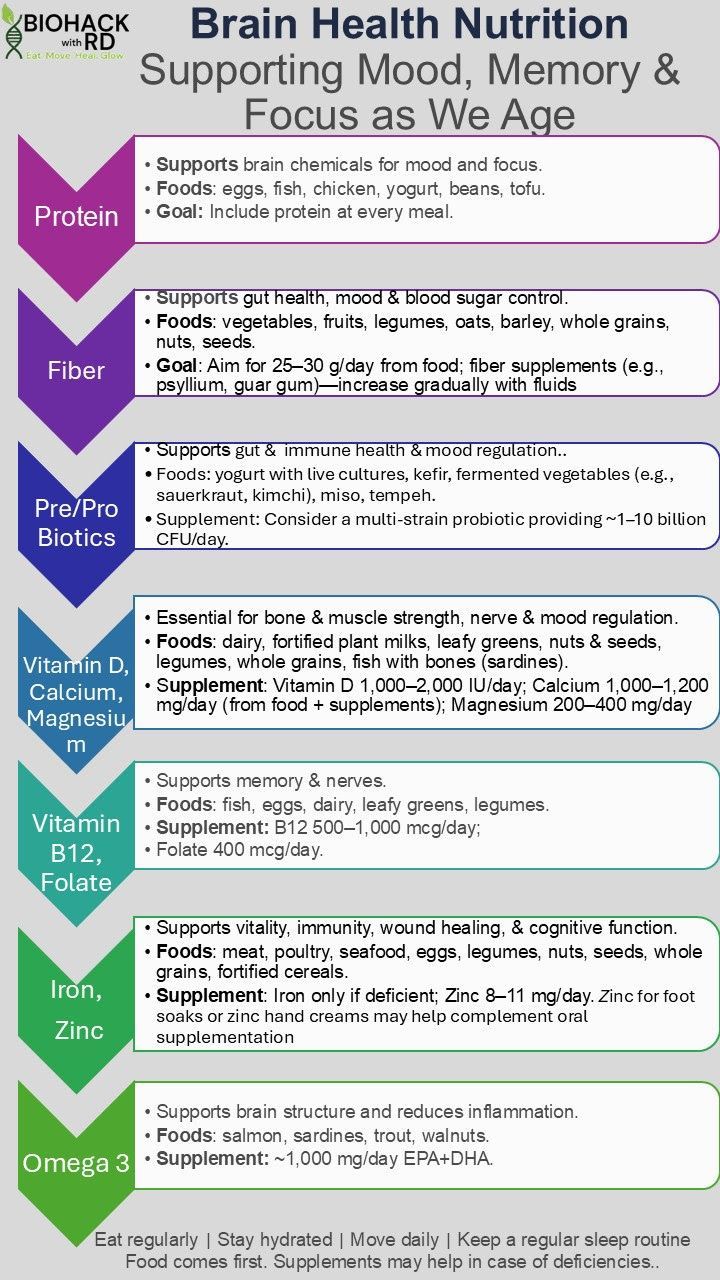
Protein and Brain Chemistry
Protein provides amino acids, which are the building blocks for brain chemicals such as serotonin and dopamine. These chemicals play a key role in mood regulation, motivation, and focus.
When protein intake is low, people may experience fatigue, irritability, low mood, or difficulty concentrating.
Fiber, Gut Health, and Mood
Fiber supports gut health and helps regulate blood sugar levels. A healthy gut plays an important role in producing compounds that influence mood and inflammation. Diets low in fiber are associated with greater blood sugar swings, which can worsen fatigue, irritability, and brain fog
Prebiotics and Probiotics
Fermented foods and fiber-rich foods support beneficial gut bacteria. The gut and brain communicate constantly through the gut–brain connection. Disruptions in gut health can influence mood, stress tolerance, and mental clarity.
Omega-3 Fats and Brain Structure
Omega-3 fats, particularly EPA and DHA, are essential components of brain cells. They help maintain brain structure and reduce inflammation. Low intake has been linked to low mood and changes in cognitive function.
Vitamins and Minerals That Support Brain Function
- Vitamin B12 and folate support nerve health, memory, and energy. Low levels are common in older adults and may show up as confusion, memory problems, or low mood.
- Vitamin D supports mood, cognition, muscle strength, and immune health. Deficiency is common, especially in individuals with limited sun exposure.
- Iron helps deliver oxygen to the brain. Low iron levels can cause fatigue, poor concentration, and low mood.
- Zinc and magnesium support nerve signaling, immune function, sleep quality, and stress regulation.
When intake of these nutrients is low, the brain may not function at its best.
Daily Habits Matter Just as Much as Food
Nutrition is most effective when paired with supportive daily routines.
Sleep plays a major role in memory and emotional balance. Poor or irregular sleep can worsen mood and increase irritability. A consistent bedtime and wake-up time can help support brain health.
Movement increases blood flow to the brain and supports emotional well-being. Gentle daily activity—such as walking, stretching, or light strength exercises—can improve clarity and mood.
Hydration is often overlooked. Even mild dehydration can affect energy, focus, and mood, particularly in older adults. Regular fluid intake throughout the day is important.
Routine and structure help the brain feel calm and regulated. Predictable meals, daily movement, and consistent sleep patterns support mental balance.